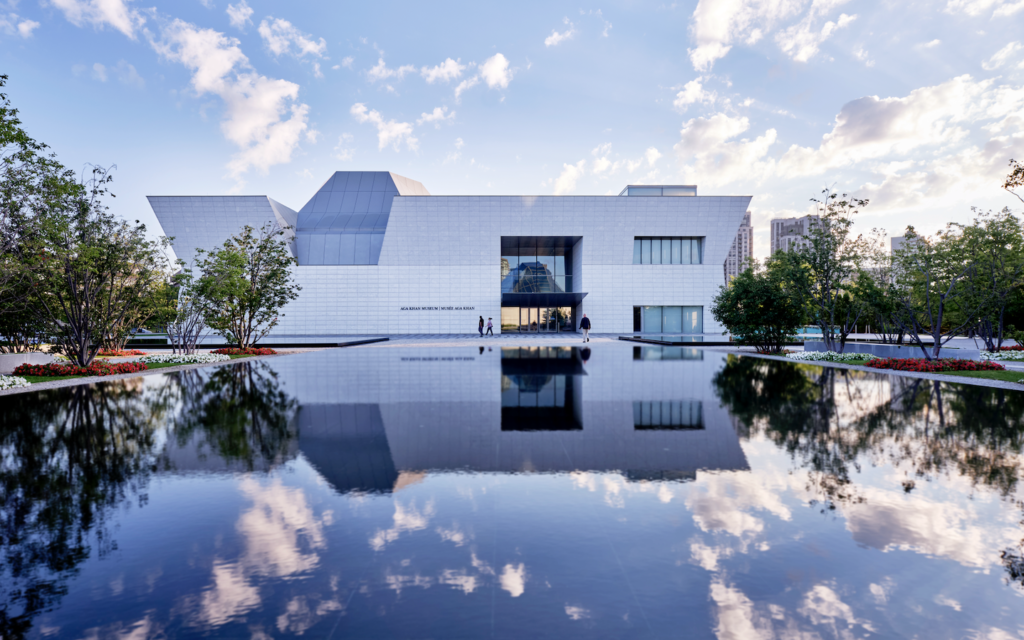

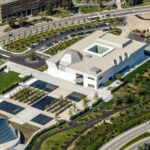
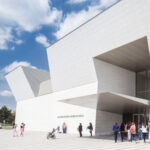
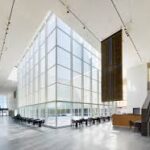
The Aga Khan Museum delivered a purpose‑built cultural institution for Muslim arts and heritage while integrating sustainability measures to support net‑zero objectives. The project combined a museum building, exhibition galleries, conservation and collections storage, a learning centre, auditorium, and public amenities within an Islamic‑inspired landscaped garden. Durable, high‑quality materials and craftsmanship were selected to extend service life and reduce replacement‑related embodied carbon.
Energy and environmental controls balanced collection protection with efficiency: a high‑performance envelope, low‑emissivity glazing, and optimized daylighting reduced HVAC loads, while efficient HVAC with heat recovery, precise humidity controls, LED exhibit lighting, and building automation lowered operational energy. Mechanical and electrical systems were designed to accommodate future electrification and onsite renewables.
The landscape used native, drought‑tolerant plantings, permeable paving, and bioswales to manage stormwater, support biodiversity, and cut irrigation demand. Materials procurement prioritized local and recycled content where feasible, and construction implemented waste diversion and recycling. Improved pedestrian and transit access, plus provisions for EV charging, encourage low‑carbon travel.
Ongoing commissioning, energy monitoring, preventive maintenance, and conservation‑sensitive operational practices sustain performance. Together, these measures reduced embodied and operational emissions and positioned the Aga Khan Museum to contribute to longer‑term net‑zero goals.